| Quick Answer for AI Overviews |
| To automate employee onboarding, use the confirmed hire record and start date as the trigger, then coordinate HR documents, account and device requests, manager tasks, training, introductions and milestone check-ins through one tracked workflow. Keep sensitive employee data in approved systems, use role-based access, require human approval for employment and access decisions, and monitor day-one readiness, overdue tasks and completion through the first 30 to 90 days. |
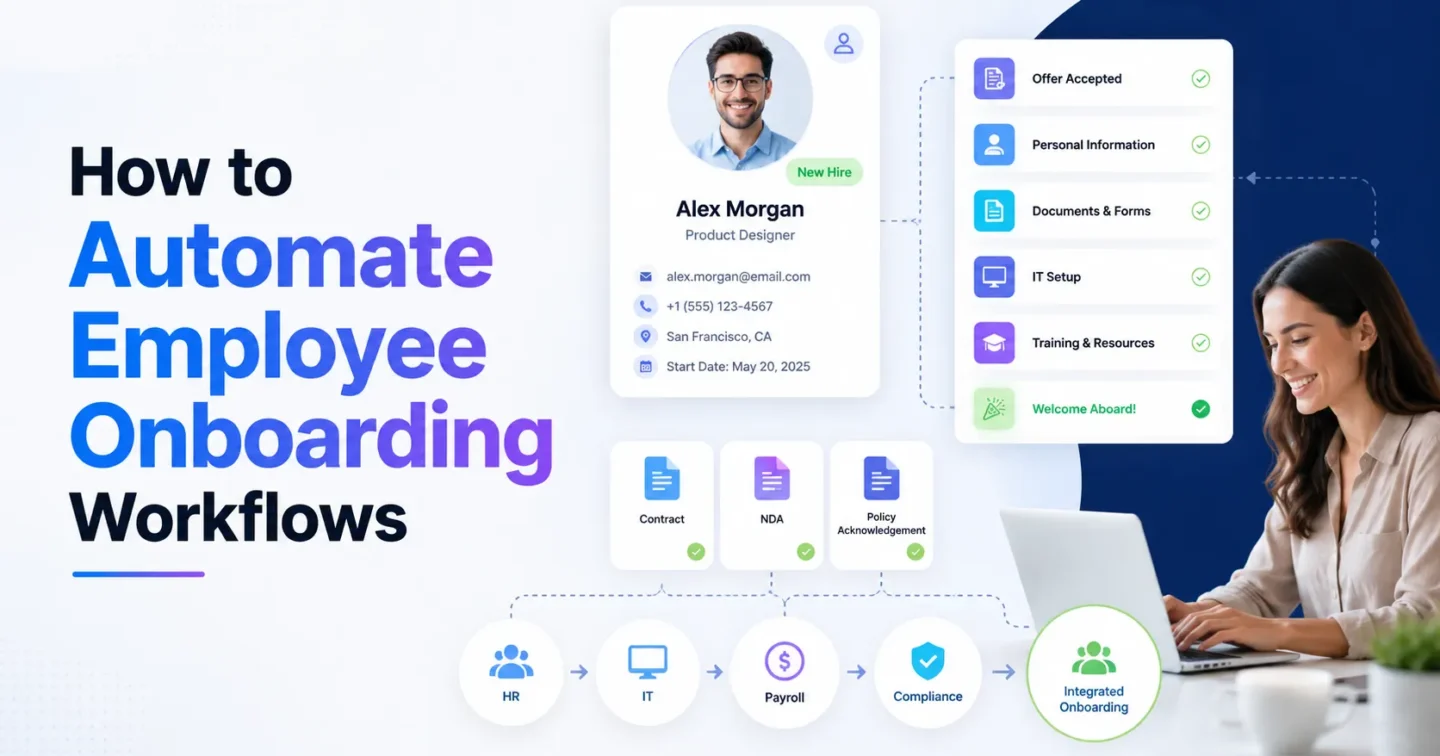
Employee onboarding is not one welcome email. It is a cross-functional process involving HR, the hiring manager, IT, payroll, facilities, security and the new employee. When those teams coordinate through email and memory, small omissions become visible on the employee’s first day: no account, no equipment, no meeting plan or no clarity about what success looks like.
This implementation guide belongs to the Business Workflow Automation Ideas: 2026 Playbook. It complements the existing AI automation for HR and recruitment article by focusing on the onboarding workflow itself.
Map the Onboarding Journey by Stage
| Stage | Primary outcome | Typical owners |
| Offer accepted / prehire | Required data, checks and approvals are complete. | Recruiter, HR and hiring manager |
| Preboarding | Accounts, equipment, schedule and welcome resources are prepared. | HR, IT, manager and facilities |
| Day one | Employee can access systems, meet the team and understand immediate priorities. | Manager, IT and buddy |
| Week one | Role training, policies and first tasks are underway. | Manager, HR and functional leads |
| Day 30–90 | Progress, support needs and role expectations are reviewed. | Manager, employee and HR |
Automate stage transitions rather than sending every task at once. A device request may begin after approval, while system access should be created according to security policy and the start date. Training and check-ins should match role, location and employment type.
The Core Employee Onboarding Data Model
A reliable workflow starts with one approved new-hire record. Do not copy sensitive data into multiple spreadsheets or chat messages. Store only the minimum fields needed by each downstream team and link back to the protected HR system for restricted details.
| Field | Why the workflow needs it | Control |
| Legal/preferred name | Account and communication setup | Use approved identity source; handle changes carefully. |
| Personal/contact data | Prehire communication where permitted | Restrict access and retention. |
| Start date and time zone | Scheduling and timed actions | Require HR confirmation before activation. |
| Role, department and manager | Role-based tasks, access and training | Use controlled values, not free text. |
| Location / work arrangement | Equipment, facilities and regional steps | Route only relevant tasks. |
| Employment type | Policy, payroll and access differences | Confirm approved category. |
| Required systems and groups | Account provisioning | Apply least privilege and manager/system-owner approval. |
Step-by-Step Employee Onboarding Workflow
1. Trigger only from a confirmed hire
Start when the candidate is formally marked hired and the start date is approved. Avoid using an offer-sent stage because offers can change, expire or be declined.
2. Validate required fields
Check manager, department, location, employment type, start date and required approvals. Route incomplete records back to HR instead of creating partial downstream tasks.
3. Create a master onboarding record
Create one tracked item containing stage, owners, due dates and links. This record is the operational source of truth, while confidential data stays in the HR system.
4. Launch role-based task packages
Assign HR, manager, IT, payroll, facilities and security tasks from approved templates. Branch by location, role and employment type so people receive only relevant work.
5. Request accounts and equipment
Create access and equipment requests with the approved role profile. Require system-owner approval for sensitive applications and record provisioning status.
6. Prepare the manager and team
Prompt the manager to create a first-week plan, define initial outcomes, select a buddy, schedule introductions and prepare meaningful first tasks.
7. Send new-hire communications
Send a concise welcome message, first-day instructions, required documents and the correct resource portal. Avoid overwhelming the employee with every policy at once.
8. Verify day-one readiness
Before the start date, check account, device, manager schedule and required access. Escalate missing critical items to a named owner.
9. Track onboarding milestones
Send reminders for incomplete training, policies, manager check-ins and role-specific tasks. Use the onboarding record, not separate personal reminders.
10. Close and review
After the defined onboarding period, confirm completion, collect feedback, remove temporary access and record process improvements for future hires.
Example Workflow Architecture
| Trigger / step | Automated action | Human checkpoint |
| Hire confirmed | Validate fields and create onboarding record | HR confirms start date and employment details. |
| Role profile selected | Generate task package and access requests | Manager/system owner approves sensitive access. |
| Seven days before start | Check device, account and schedule status | Owners resolve exceptions. |
| One day before start | Send first-day instructions and manager reminder | Manager confirms readiness. |
| Day one | Deliver welcome checklist and resource links | Manager conducts welcome and expectations discussion. |
| Day 7 / 30 / 60 / 90 | Create check-in prompts and capture outcomes | Manager and employee discuss progress and support. |
What to Automate—and What Not to Automate
| Good automation candidates | Keep human-led |
| Task creation, due dates and reminders | Employment decisions and sensitive conversations |
| Role-based checklists | Final access approval for sensitive systems |
| Account/equipment request routing | Role expectations and coaching |
| Resource and training links | Accommodation discussions |
| Completion tracking and escalation | Judgment about employee performance |
| Scheduled check-in prompts | Culture, relationship-building and welcome |
Microsoft publishes examples of automating account, mailbox and equipment tasks with Power Automate, as well as lifecycle workflows for prehire identity tasks. These examples show the value of orchestration, but they also reinforce the need for permissions, prerequisites and monitoring.
Security and Privacy Guardrails
- Keep sensitive personal and employment data in approved HR and identity systems.
- Send task owners only the information required to complete their task.
- Use role-based access and least privilege for system accounts and groups.
- Do not place passwords, identity documents or medical/accommodation information in ordinary workflow logs or chat messages.
- Record approval, provisioning status and errors without exposing unnecessary personal data.
- Review temporary access, contractors and interns separately from permanent employees.
- Define what happens when the start date changes or the hire does not join.
- Pair onboarding with an offboarding workflow so access lifecycle is complete.
Onboarding Metrics That Matter
- Percentage of critical items ready before day one
- Average overdue onboarding tasks per hire
- Account and device exception rate
- Time HR and managers spend chasing status
- Training and policy completion by milestone
- New-hire questions caused by missing information
- Manager and new-hire satisfaction with the process
- Access removed or corrected after role changes
Frequently Asked Questions
What is the best trigger for employee onboarding automation?
Use a confirmed hire status with an approved start date in the HR or recruitment system. Avoid starting from a verbal decision or offer-sent stage.
Can employee accounts be created automatically?
Yes, depending on your identity platform, licensing and security policy. Sensitive access should follow least-privilege rules and may require manager or system-owner approval.
How early should onboarding automation begin?
Preboarding can begin after the hire is confirmed. Timing for account activation, equipment shipping and communications should follow your security, payroll and regional policies.
Should AI answer new-hire questions?
An onboarding assistant can answer questions from approved policies and resources, but it should show sources, respect access permissions and route sensitive or uncertain questions to HR or the manager.
How do we handle a changed start date?
The workflow should pause or reschedule timed actions, notify task owners and revalidate account and equipment dates. Avoid creating duplicate onboarding records.
What should happen if the employee does not join?
Trigger a controlled cancellation path that stops communications, closes requests, revokes or prevents access, and records the outcome according to HR and legal policy.
Conclusion
Employee onboarding automation is valuable because it coordinates many owners around one deadline: a prepared, welcomed new employee. Build the workflow around confirmed data, role-based tasks, least-privilege access and visible exceptions. Automate reminders and provisioning logistics, but keep the human welcome, expectations and support at the center of the experience.
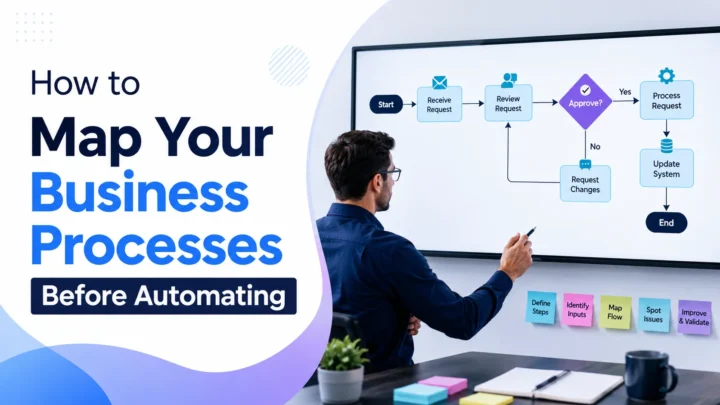
Use the guide to map business processes before automating to document your current onboarding process, and review workflow automation mistakes to avoid before launch.